Flora Ackroyd
The Murder of Roger AckroydFlora Ackroyd is Roger Ackroyd’s niece and Ralph Paton’s fiancée, a young woman first presented as poised and straightforward but later revealed to have hidden a theft from her uncle. Her admission makes her a vivid instance of the novel’s pattern of concealment: she is neither the murderer nor simply the transparent figure her appearance initially suggests, and her private wrongdoing helps explain both her bond with Ralph and the pressure surrounding the investigation.
Identity and Introduction
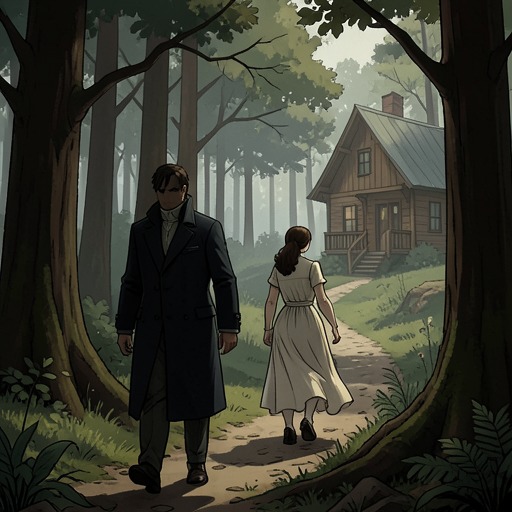
Flora enters while Dr. James Sheppard is examining the open silver display table. The narrator describes her as exceptionally fair, with pale-gold hair, blue eyes, and a healthy appearance, and judges her a straightforward English girl. That confident assessment belongs to Sheppard’s perspective; the story subsequently complicates the impression by showing how much Flora has concealed.
Her first consequential announcement is personal and public. She tells Sheppard that she is going to marry Ralph and holds out her left hand, where a single pearl sits on the third finger. She adds that Roger is pleased because the marriage will keep Ralph within the family. The engagement therefore appears to fit comfortably within the household, even as Ralph’s unexplained absence and financial difficulties later make him a central suspect.
Seeking an Investigation
After Roger’s murder, Flora asks Hercule Poirot to find the murderer. She is not reassured by the prospect of relying on the police: she believes they may be about to make a mistake and appeals directly to Poirot for help. Her intervention places her among those who want the inquiry directed away from an erroneous conclusion, although she does not at first disclose her own hidden conduct.
The police case against Ralph gains force from a sequence of apparently connected details. He was seen near Fernly Park at about half past nine, had not been seen since, and was believed to be in serious financial difficulty. Inspector Raglan also has a pair of Ralph’s shoes, which he intends to compare with the marks at the study window. In Raglan’s reconstruction, Ralph leaves by the window, returns to the house, takes the dagger from the silver table, and re-enters the study. The account turns Flora’s engagement into part of the pressure around Ralph’s suspected motive, but it is an investigative hypothesis, not proof that she took part in the murder.
Confession and Financial Pressure
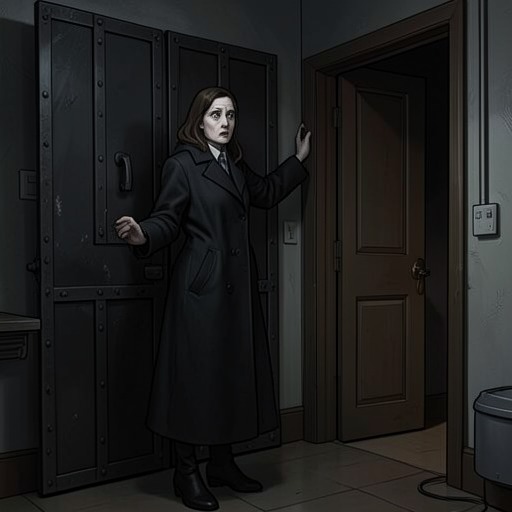
Poirot eventually confronts Flora with the concealed theft. He recalls asking her to be frank and states that she took the money. Flora confirms that she stole it, calling herself a thief and saying she is relieved that the secret has come out. Her response makes clear that the admission has weighed on her through the days of the investigation.
She describes a pattern of wanting things, scheming, lying, cheating, accumulating bills, and promising to pay. Her confession gives the theft a concrete context: it was not an isolated misunderstanding but part of a financial and moral difficulty she says she had been unable to manage openly. The disclosure also changes how her earlier request for Poirot’s help reads. Flora had sought a correct investigation while still carrying a secret that could expose her to suspicion.
Flora connects that weakness to her relationship with Ralph. She says that their mutual weakness brought them together: she understood him and felt sorry for him because she recognized the same weakness in herself. She describes neither of them as strong enough to stand alone. The engagement, presented at first as a family arrangement welcomed by Roger, thus acquires a more intimate explanation in Flora’s account: sympathy and shared vulnerability bind the couple alongside their public promise to marry.
Relationships and Revelations
Flora’s plea for Poirot’s assistance shows that she distrusts the police’s developing direction, while her eventual confession demonstrates that she is willing, at least under direct questioning, to acknowledge her own part in the household’s hidden troubles. The distinction matters: her theft is real, but it is not the murder. The investigation separates her secret from the crime rather than allowing one suspicion to stand as proof of the other.
Poirot also turns attention to Hector Blunt, telling him that he has recognized Blunt’s love for Flora and urging him not to conceal it from her. Blunt reacts sharply to the revelation, which makes his concealed feeling a further secret within Flora’s circle. The available scene establishes Poirot’s interpretation and Blunt’s response, not a settled outcome for Flora and Blunt’s relationship. It nevertheless places her at the center of several unequal forms of concealment: her theft, her shared understanding with Ralph, and Blunt’s unspoken love.
Narrative Role and Significance
Flora’s characterization depends on the gap between appearance and disclosure. She initially seems so healthy and straightforward that Sheppard treats those qualities as evidence of character; later, her account exposes the financial strain and dishonesty beneath that first impression. The reversal does not make her a villain. Instead, her confession distinguishes a culpable but limited act from the far graver crime under investigation and gives emotional substance to her compassion for Ralph.
Her theft also helps show how the mystery’s suspects and witnesses can conceal different kinds of truth. Flora’s secret has consequences for suspicion and for her understanding of her engagement, but Poirot’s reconstruction of the murder ultimately points beyond her: he argues that the killer had been at the Three Boars, knew Roger had bought a dictaphone, had mechanical knowledge, could take the dagger before Flora arrived, and had a suitable bag for hiding the device. In this chain of reasoning, Flora’s presence matters as a limit on opportunity: Poirot recalls that she was certain the dagger was no longer on the silver display table when she examined it. Her testimony helps narrow the timing of the theft of the weapon even as her own confession resolves a different mystery.